Field supervision
Daily presence on site. Trades sequenced, deliveries staged, conflicts resolved at the wall instead of over email three days later.
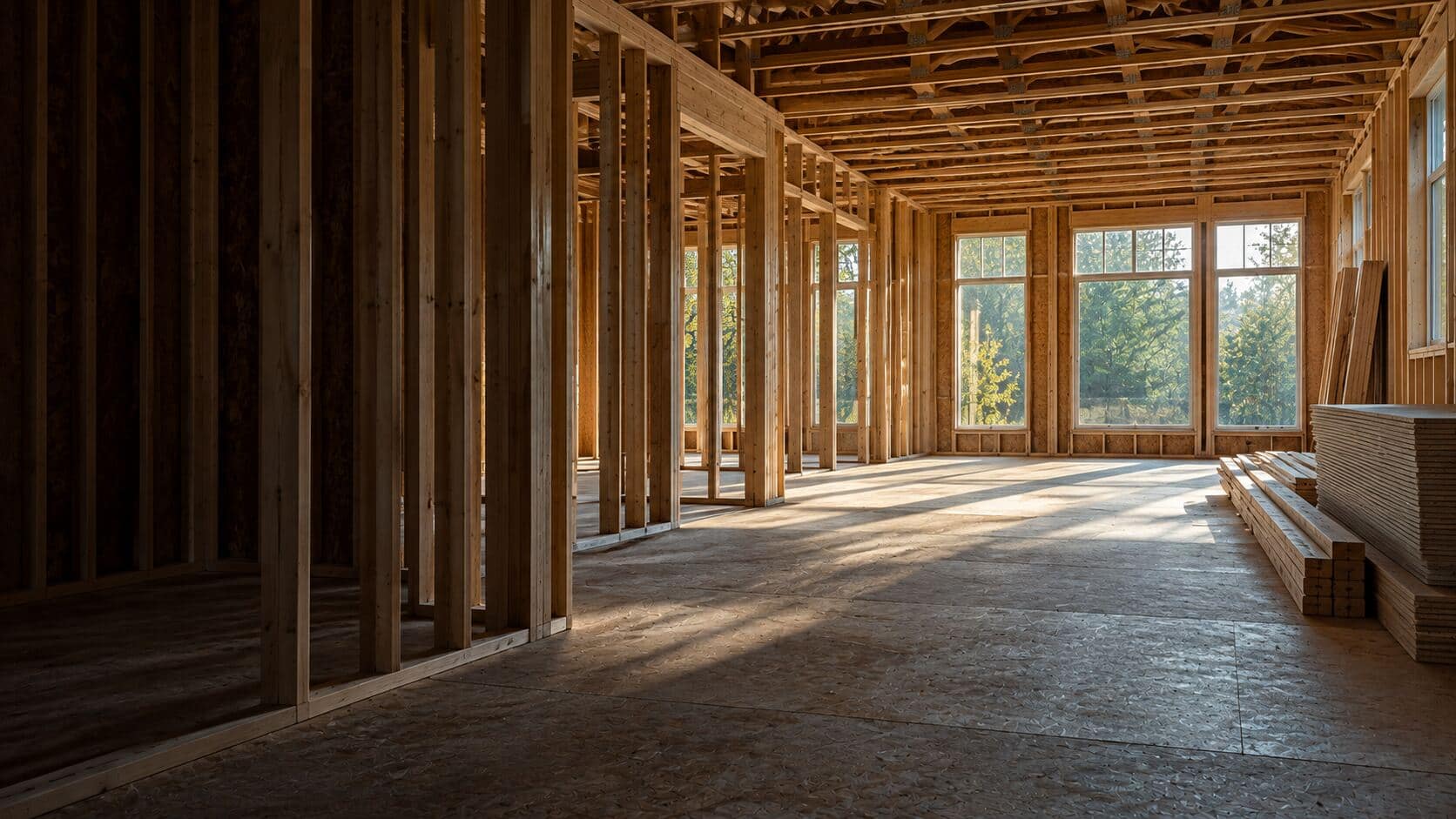
For builders, owners and licensed GCs
Projects do not usually fail on craftsmanship. They fail in the gaps — the sub who was never called, the inspection nobody scheduled, the decision that sat for nine days. We run the trades, the schedule and the field decisions on your behalf, under your license, and give you one person to call who already knows the answer.
What this division does
Each of these is quoted as its own line item, so a project that only needs one of them is not carrying the cost of the other five.
Daily presence on site. Trades sequenced, deliveries staged, conflicts resolved at the wall instead of over email three days later.
Scopes written so two subs cannot both exclude the same work. Bids leveled against each other. Performance tracked against the dates they committed to.
A real critical path with inspection holds and material lead times in it, updated weekly, with the one or two items actually driving the finish date called out by name.
A weekly report with photos, percent complete, what moved, what is at risk and what decision we need from you — in a format you can forward to a lender or an owner without rewriting it.
Schedule of values, marked-up sub bids, and change orders priced and approved before work proceeds. No surprises at closeout.
Punch generated, assigned by trade, driven to zero, with warranties, manuals and lien waivers collected before final payment.
How we run it
We confirm who holds the license, who holds the contract, and exactly where our authority starts and stops. In writing, before mobilization.
Trades scoped, bid, leveled and awarded, with the gaps between scopes closed before anyone is on site.
Daily field presence, weekly schedule update, weekly written report, change orders handled as they arise.
Punch to zero, documentation collected, final accounting reconciled against the schedule of values.
What you are buying
Published here so you can compare us against another bid line for line. Most of the difference between two quotes is in the second column.
Any of these can be added — they are listed separately so the price you compare is the price you pay.
Construction Management questions
A general contractor holds the contract, carries the license and takes the risk on the trades. A construction manager runs the work on behalf of whoever holds that contract — scheduling, scoping, coordinating subs, reporting and driving the punch — without being the licensed party of record. We operate as the construction manager under a licensed holder, which is stated in writing at the start of every engagement.
Our recent managed projects have run from roughly $95,000 to $220,000 in installed value, coordinating up to ten trades on a single job. That is the band where an owner or builder needs daily presence but cannot justify a full-time superintendent.
Either a percentage of construction value or a fixed monthly management fee, depending on how defined the scope is and how long the schedule runs. Both are quoted against a written scope of management services so you know what the fee covers and what it does not.
Yes. Taking over a job mid-flight is common. The first week is spent reading the existing contracts, finding the scope gaps and building a real schedule from where the job actually is rather than where the original schedule says it should be.
No cost, no obligation
Tell us about the project — value, trade count, schedule and who holds the license. We will come walk it and send a written scope of management services with a fee.
Also in house
Mobilization is a real cost. Combining divisions on one scope is cheaper than hiring each trade separately, and it means one schedule instead of three.
Call and talk it through, or send the project details and we will come walk it with you.